

AutoCAD 2027.1
AutoCAD 2020, released in March 2019, brought a new dark blue interface, Quick Measure tool for instant dimension display, a visual Blocks Palette with drag-and-drop, enhanced DWG Compare, and a redesigned Purge feature with previews and explanations. Performance improved with faster save times and 50% quicker SSD installs, plus cloud integration with Box and OneDrive. System requirements include Windows 10 64-bit, 8–16 GB RAM, and a DirectX 11 GPU with at least 1 GB VRAM (4 GB recommended). Autodesk now sells AutoCAD by subscription only, around $2,000/year for full AutoCAD and $500/year for LT. Free alternatives like FreeCAD offer capable 2D and 3D modeling at zero cost, while SketchUp excels for quick 3D concept work. AutoCAD 2020 remains a reliable, if aging, workhorse for professionals already invested in its ecosystem.
- Free trial
- Windows
- macOS
- Nov 8, 2026
Screenshots

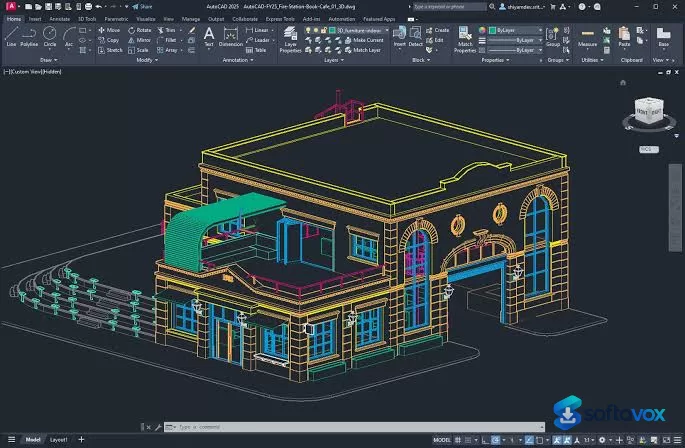
About AutoCAD
AutoCAD Download, Professional 2D and 3D CAD Design Software
TL;DR Quick Take / Who is this for?
AutoCAD is the de facto industry standard for computer-aided design, used by architects, engineers, and construction professionals to produce precise 2D technical drawings and 3D models. The 2026 release is a mature, feature-dense platform that includes seven industry-specific toolsets for electrical, mechanical, architectural, and plant design, alongside automation features for comparing drawings and counting objects. It holds a 4.6 out of 5 rating across thousands of verified reviews, with users consistently praising its accuracy, precision, and 2D drafting capabilities. The trade-offs are steep and well documented. AutoCAD is subscription-only, starting at $250 per month, with per-seat annual costs around $1,775, a price point that makes it inaccessible for hobbyists and small teams. The learning curve is notoriously steep, with reviewers noting that advanced features remain hidden unless you already know they exist. The software is also resource-hungry, with frequent crashes and performance glitches reported by users. AutoCAD is the right pick for professionals and firms where DWG file compatibility is a business requirement and precision drafting is the core of daily work. It is not the best choice for casual users, budget-conscious creators, or anyone who needs responsive customer support.
Quick Info Box
| License Type | Subscription only (from $250/month; ~$1,775/year per seat) |
|---|---|
| File Size | Approx. 2.7–3.2 GB installer; 10 GB installed (SSD recommended) |
| OS Compatibility | Windows 10/11 (64-bit); macOS 13 or later |
| Latest Version | AutoCAD 2026 (v2026, released March 2025) |
| Developer | Autodesk, Inc. |
Key Features & Real-World Usability
AutoCAD's feature set is built for professional precision, and the 2026 release continues that tradition without dramatic reinvention. The core platform handles 2D drafting and 3D modeling with solids, surfaces, and mesh objects, and the included specialized toolsets extend the software into seven industry domains: electrical design, plant design, architecture, mechanical design, 3D mapping, scanned image integration, and raster-to-vector conversion. In real-world use, this breadth means you can move from a mechanical part drawing to an architectural floor plan without switching applications, provided you have the training to use the different tool libraries. Automation features streamline repetitive tasks. Drawing comparison tools highlight changes between revisions, counting tools tally blocks and objects across a drawing, and table creation pulls data from geometry automatically. These features are genuinely useful for quality control and documentation in production environments. The platform also supports data import and export across a wide range of formats, and cloud integration allows file sharing and project coordination without leaving the desktop application. Cross-platform access is another pillar. Autodesk offers AutoCAD Web and mobile apps, which are included with desktop subscriptions and allow you to view, edit, and mark up drawings from a browser or a phone. The interface is highly customizable, and the software supports automation through AutoLISP and other APIs, which is one reason it has remained entrenched in engineering workflows for decades. The limitations are consistent with a legacy-grade professional tool. The interface is dense and has not received a modern visual overhaul, which reviewers note makes it feel dated compared to competitors. Advanced features are often hidden from view, requiring prior knowledge of their existence to leverage them. Performance is inconsistent, with users reporting frequent crashes, glitches, and lag during complex operations, particularly with 3D work.
- Precision 2D drafting: Industry-leading accuracy for technical drawings, with a comprehensive set of dimensioning, annotation, and layer management tools.
- 3D modeling and visualization: Solids, surfaces, and mesh modeling for conceptual and detailed design work, with support for point clouds and large datasets.
- Seven specialized toolsets: Industry-specific libraries for electrical, mechanical, architectural, plant, and mapping workflows, included with the base subscription.
- Drawing comparison and counting: Automated tools for identifying revisions and counting blocks or objects, reducing manual quality-control effort.
- Cloud and mobile access: AutoCAD Web and mobile apps included with desktop subscriptions for viewing and editing drawings on the go.
- Extensive customization and automation: Support for AutoLISP, APIs, and custom workflows that allow teams to tailor the software to their processes.
- Broad file format compatibility: Native DWG support and import/export for a wide range of industry formats, maintaining interoperability with clients and partners.
Pros, Cons & Community/User Feedback
User sentiment around AutoCAD is overwhelmingly positive on capability but sharply critical on cost, learning curve, and support. On Software Advice, the software holds a 4.6 out of 5 rating, with functionality scored at 4.59 and ease of use at 4.12. Capterra records a 4.6 average from 3,481 reviews, with a positive sentiment of 97% and negative of just 0%. Reviewers consistently highlight accuracy and 2D drafting as the software's defining strengths. One user describes it as a "perfect program to create customized and precise projects," while another notes that it is "quite easy to use in 2D spaces settings". Gartner Peer Insights reviewers add that the basic features are relatively intuitive and allow for a smooth learning curve regarding core functionality, but that more advanced features are less apparent and require prior knowledge of their existence to leverage. The complaints fall into three consistent categories. First, cost: reviewers describe the licensing as "expensive" and "high," with per-seat annual costs around $1,775 dominating forum complaints. The software is subscription-only, with no perpetual license option, which means users never own the tool. Second, learning curve: Capterra reviewers note that AutoCAD is "one of the more trickier software programs to learn," and Gartner reviewers state that "AutoCAD ease of use has always lagged its competitors". Third, performance and stability: users report "frequent crashes and glitches," "heavy resource and speed demands," and that 3D design is "not as good as 3D max". One critical Gartner reviewer sums it up bluntly: "I find the software to be very slow... The user interface and commands are not intuitive and require online learning". The practical takeaway is that AutoCAD's precision and industry-standard status are genuinely unmatched, while its subscription cost, steep learning curve, and performance quirks are the areas where user frustration is most acute.
Pros
- Industry-standard DWG compatibility and precision for 2D drafting
- Seven specialized toolsets included in the base subscription
- Drawing comparison, counting, and table automation tools for quality control
- Cloud and mobile apps included for cross-device access
- Extensive customization through AutoLISP and APIs
- 4.6/5 rating across thousands of verified reviews, with 97% positive sentiment
- Free viewers available for non-designers to open and mark up files
- Broad import/export format support for interoperability with clients
Cons
- Expensive subscription-only pricing: ~$1,775 per seat per year, with no perpetual license
- Steep learning curve, with advanced features hidden from casual users
- Frequent crashes, glitches, and lag reported, particularly with 3D work
- Interface feels dated and has not received a modern visual overhaul
- Customer support quality is inconsistent, with a 1.2/5 Trustpilot rating for Autodesk
- Recurring security patches required for maliciously crafted CAD files
- License compliance audits conducted against customers
- High system requirements: 8 GB RAM minimum, 32 GB recommended for large models
Final Verdict & Safe Download Advice
AutoCAD remains the benchmark for professional 2D drafting and the safe default for any firm that exchanges DWG files with clients and partners. The 2026 release is a mature platform with deep tooling, specialized libraries for multiple industries, and automation features that save real time on production work. If you are an architect, engineer, or construction professional whose daily output depends on precision drawings and seamless file compatibility, AutoCAD is not optional, it is the cost of doing business in an ecosystem that has standardized on DWG. The caveats are equally clear. The subscription cost is high and recurring, the learning curve is steep, the interface is dated, and performance is not always reliable. If you are a hobbyist, a small team, or a user who only needs occasional 2D drafting, free or low-cost alternatives like LibreCAD, DraftSight, or BricsCAD offer capable tools at a fraction of the price. If you need advanced 3D modeling, dedicated tools like Fusion 360 or Blender may serve you better for specific workflows. For everyone else, AutoCAD is the industry standard for a reason, and the 2026 release delivers what professionals need, provided you are prepared to pay for it and invest the time to learn it.
- Download only from autodesk.com or the official Autodesk Account portal: The legitimate installer is distributed through Autodesk's website and the Autodesk desktop app. Third-party "AutoCAD free download" sites frequently distribute cracked installers bundled with malware, and those builds cannot receive updates or security patches.
- Verify the installer size and version: The AutoCAD 2026 installer is approximately 2.7–3.2 GB depending on the edition and included toolsets, and the installed footprint is around 10 GB. The current version is AutoCAD 2026. A dramatically smaller file or an older version number is a warning sign.
- Check system requirements before installing: Windows requires Windows 10 or 11 (64-bit), a 2.5–2.9 GHz processor with 8 logical cores, 8 GB of RAM minimum (32 GB recommended), a GPU with 2 GB VRAM and DirectX 11 support, and 10 GB of free disk space (SSD recommended). macOS requires macOS 13 or later and 8 GB of RAM minimum.
- Use the free trial to evaluate performance: Autodesk offers a 30-day free trial. Use it to confirm that AutoCAD runs acceptably on your hardware, particularly if you work with large 3D models or point clouds, before committing to a subscription.
- Understand the subscription terms before purchasing: AutoCAD is subscription-only, with monthly and annual billing options. There is no perpetual license, and if you stop paying, you lose access to the desktop application. Check the refund and cancellation policies before committing to an annual plan.
- Do not download "cracked" or "pre-activated" versions: AutoCAD is a commercial product with a trial available. Cracked installers are a primary vector for malware and credential theft, and they will not receive the security patches that Autodesk regularly releases for maliciously crafted CAD files.
Similar software









Frequently asked questions about AutoCAD
Is AutoCAD safe to install?
Is AutoCAD free?
Which systems does AutoCAD run on?
What is AutoCAD used for?
How is AutoCAD different from FreeCAD or SketchUp?
How do I update or uninstall AutoCAD?
What’s new in AutoCAD 2027.1
The AutoCAD 2027 release focuses on AI-driven insights, performance improvements, and connected design workflows.
New Features & Improvements (AutoCAD 2027)
Autodesk Assistant (AI-Powered): An AI-driven assistant that provides contextual help and insights directly within the application, helping users find commands and troubleshoot issues faster.
Connected Support Files: Extends integration with Forma Data Management, giving CAD managers centralized control over cloud-based support files. Project-aware tool palettes and CUI ensure the correct resources load automatically.
Geometry Cleanup Palette: A new tool that helps detect and clean up overlapping or redundant geometry in drawings, improving drawing quality and performance.
Enhanced Smart Blocks: The Detect and Convert feature (formerly technical preview) is now fully implemented, using machine learning to automatically detect and convert similar shapes into blocks with greater accuracy.
Markup Import & Markup Assist: Improved tools for importing and managing markups from Autodesk Docs, including support for Docs Issues.
Performance Improvements: Layout tab switching performance is significantly improved. DWG file open and startup speeds continue to be optimized.
New System Variables: New variables including VIEWPORTLAYER, REVCLOUDLAYER, and TABLELAYER provide greater control over layer properties.
Changes & Discontinued Features (AutoCAD 2027)
Removal of MrSID Image Format Support: The MrSID image format is no longer supported.
Removal of PSOUT Command: The PostScript file output (PSOUT) command has been removed.
DWG Format: AutoCAD 2027 continues to use the AC1032 DWG format, introduced with AutoCAD 2018.
AutoCAD 2027.1 Update Highlights
Connected Sheet Set Manager: Enhanced functionality with full support for working with and organizing cloud sheet sets.
Smart Blocks: Detect and Convert: Fully implemented version of the machine-learning-powered block detection feature.
Additional Enhancements: New visual styles with FASTSHADEDMODE support, improved GDI plotting, and various other refinements.
Versions
| Version | Release date | Platform | File size | |
|---|---|---|---|---|
| AutoCAD 2027.1 Latest version | Mar 25, 2026 | Windows | 3.3 GB | Download |
Comments about AutoCAD
No comments yet. Share your experience with this program!